Thursday, 8 October 2015

Importance Of Heart - 2

In my earlier blog, I have discussed the basic details about Heart.

Valves of the Heart Control the Blood Flow:

  • Just like our kitchen sink controls the flow of water in to the sink, the valves of the heart control the flow of the blood. 
  • What is amazing about these valves is that they close just in time as the pressure of the blood builds in the heart. Just imagine the billions of times these valves close and open in our life time!!

Did You Know?


It was only in 1700’s that the heart was discovered as an organ that pumps blood throughout the body.


In a Heartbeat:

  • A heartbeat may seem like a simple repeated event, but it is a complex series of very precise and coordinated events that takes place inside and around your heart.
  • Nerves connected to the heart regulate the speed with which the muscle contracts.
  • A average heart muscle contracts and relaxes about 70 to 80 times a minute.
  • The heart conducts electricity that helps to control heartbeats. Both contraction and relaxation are the electrical events that we can see on ECG.
  • When you run, the heart pumps more quickly. When you sleep, the heart pumps more slowly. 


Did You Know?


In my next blog, I will discuss regarding the amazing nutrients that our heart requires.

Monday, 28 September 2015

Importance of Heart - 1

Our heart works tirelessly to provide the power needed for life. Learn how to take care of it!

Why do we need the Heart?

  • The cells of the body take up oxygen and release carbon dioxide just like our car uses the fuel to get the energy to drive and then it puts out exhaust through the exhaust pipe.
  • The heart is the organ that supplies blood and oxygen to all parts of our body.

Arteries and Veins carry the blood:

  • The oxygenated blood circulates all around the body through arteries.
  • After the tissues use the oxygen, the blood coming from the cells is carried in the veins back to the heart.
  • The arteries and veins are next to each other in arms, legs and core of the body.

The Heart helps our blood carry oxygen:


(From The Above Picture)
Step 1: Heart pumps blood to all the cells and tissues of the body. The arrow is red indicating that this blood is oxygen rich.
Step 2: Release of oxygen poor blood from tissues and cells of the body, that has used the oxygen to provide the energy to the cells. This blood shown in blue arrow returns to the heart.
Step 3: Heart pumps this oxygen poor blood to lungs where it picks up oxygen carried in the air we breathe.
Step 4: The oxygen rich blood is returned to the heart and pumped out to the body.

The two sides of the Heart: ( Right & Left)


Since the left side has to do so much more work, the left side valve is thicker than right.

Did You Know:


The bottom of our heart is tipped to the left, so we feel more of our heartbeat on left side.


        Will be continued.....

Monday, 21 September 2015

How Muscles Work & Grow Part 2


This blog explains why we don't need to be an athlete to appreciate the importance of muscles in our everyday life.

How to Maintain Your Muscles:

  • Muscles are constantly remodeling: some cells grow and others shrink.
  • If you don’t use your muscles, they shrink.
  • You must exercise and nourish your muscles to prevent shrinkage.

Strength Conditioning:


A strength workout will make our muscles strong and we look and feel better too.
Regular strength workout sessions will offer us other benefits like
  • Healthy Bones
  • Great Posture
  • Increased Metabolism
  • Improved Balance

Muscle Strength Decreases with Age

Muscle Strength:
  • Is relatively stable through age 50.
  • Decreases 50% per decade between ages 50 to 70.
  • Decreases 30% between the ages 70 to 80.

With aging, the ability to engage in physical activity declines, due to loss of muscle strength.

Decreased physical activity contributes to muscle loss and alters body composition in number of ways.If we don’t move, muscle mass is decreased while fat mass is increased. People with sedentary jobs and senior citizens with decreased physical activity loose muscle tone. So make sure to maintain healthy active lifestyle.

Keep your Muscles Hydrated:

  • A 1.5% decrease in water results in a decrease of muscle strength.
  • Staying hydrated can help you maintain your strength and help you build muscles over time.
  • The more fluid inside the muscle cell, the larger the muscle cell will be.

Nutrition for Healthy Muscles:

  • High quality protein.
  • The right building blocks from amino acids in protein
  • Vitamins & Minerals
  • Healthy Carbohydrates for quick energy

Tuesday, 15 September 2015

How Muscles Work & Grow Part 1

What do Muscles Do?
  • Without Muscles we will not be able to do anything.
  • Muscles let you move your arms and legs and life weights.
  • Muscles move blood throughout the body.
  • Muscles help your intestine digest food.
Working Of Muscles:
  • Muscles are made of special cells that look like long thin tubes, with two sets of sliding fibers.
  • A little protein motor moves muscle fibers together to contract muscles and apart to relax them.
  • During exercise, when we stretch fibers apart, we stimulate muscle cells to grow.
  • When muscles grow they recruit small cells called satellite cells.
  • These satellite cells add proteins, so the muscle fiber gets larger. This is how muscles grow larger.
  • Eating any food, particularly food higher in protein after workout helps muscle to recover faster.
Did you know?


Types of Muscles:

Three types of muscles are key to help blood move throughout your body, to move your limbs and exercise and to help digest food.
1.      Cardiac muscle cells help move blood.
2.      Skeletal muscle cells help you exercise.
3.      Smooth muscle cells help digest food.

Maintaining all types of Muscles is important for our health.

In our next session, we will discuss in detail regarding:
  •        Types of muscles
  •               How to maintain Muscles?
  •               Strength conditioning
  •        How Muscle strength decreases with age?
  •       How healthy and active muscles can be maintains?


Monday, 22 June 2015

Nutrition for Healthy, Active Life - 2

How much exercise do we need:

Benefits of Aerobic Exercises:

Aerobic exercise increases the flow of oxygen to Heart & Brain.This is the key to maintain low stress levels. Benefits of Aerobic Exercises are :
  • Conditions our heart
  • Control weight
  • Stress Relief

Examples of Aerobic Exercises are :

How many calories do we burn?

The number of calories we burn is calculated by our weight and time spent in our activity.

Good nutrition for a healthy, active life:

  • Make sure to keep a balanced nutrition diet to maintain a healthy active life. 
  • This means eating the recommended levels of Vitamins, Minerals, Fats, Carbohydrates and Proteins.

Thursday, 11 June 2015

Nutrition for Healthy, Active Life -1

What is Healthy Active Life?

  • A healthy life includes all types of physical activity including Sports, Working out at Gym and Everyday Activities.
  • As you see, a healthy life will not only have Physical benefits but emotional benefits as well.
  • The importance of healthy, active life is to make it part of our daily life.

Everyday Activities:

  • In today’s busy life, mostly we may find difficult to get time to exercise or make a trip to the Gym. 
  • Lots of the activities like, Taking the stairs, Walking the dog , Housework etc ,that are the part of living burn calories and support a healthy, active life.

Benefits of Exercise:

  • Weight Control
  • Muscle Growth
  • Fat Reduction
  • Stronger Bones
  • Stress Relief


Did You Know:

Exercise is a proven way to maintain your healthy body weight after weight loss- with just 30 minutes per day!

In my next blog, I will discuss regarding the below topics.

  • How much exercise do we need?
  • Benefits of Aerobic Exercises.
  • How many calories do we burn?
  • Good nutrition for healthy, active life.
To be continued......

Thursday, 12 March 2015

What is your shape?


·         Do you know how much fat you're carrying, compared to how much muscle?
·         Do you know where you tend to gain weight–upper body, lower body or around the middle?

Until you know the answers to these questions, you are not ready to make your personal plan for losing weight and keeping it off. Understanding your body is the first step to reaching your best personal shape.

Body shape counts

Weight loss has been overemphasized and body shape underemphasized. Body shape counts. Shapes are personal and go beyond the usual apple and pear.
·         Women can have three typical body shapes–upper body fat, lower body fat and both upper and lower body fat.
·          Men usually only get upper body fat.
·         The upper body stores fat in times of stress and some people can lose and gain weight rapidly in the upper body.
·          The lower body fat in women responds to female hormones such as estrogen and progesterone and stores fat for breastfeeding a new born baby.
·          Women who have both upper and lower body fat will lose their upper body fat first.
·         Women with more upper body fat tend to have more muscle than women with lower body fat and will need more protein in their diet to help control their hunger.
·         Losing weight is harder if you have lower body fat rather than upper body fat, but the medical benefits of losing your upper body fat are greater.
·         Losing weight around your neck, face, chest and waist usually goes along with losing fat on the inside as well. So as you look better, you are also improving your health tremendously.

Finally, there are two more body shapes to consider: 

  • The shape you can change and the shape you can't change. 
  • It is important to know the difference and work on the shape you can change, while adjusting your wardrobe and attitudes to the shape you cannot change.
  •  Due to low metabolism, many women with lower body fat can't lose weight just by cutting calories. 
  • These lower body-fat cells are resistant to both exercise and diet. 
  • Only a personalized program can help make sure you get enough protein to control cravings and build or maintain lean muscle.


Tuesday, 3 February 2015

Obesity-2

In our earlier blog, we discussed fine details about Obesity. In Continuation.....

What is BMI

  • Body Mass Index(BMI) estimates our body fat and is used the categorize people as Underweight, Healthy Weight, Overweight or Obese.
  • BMI is indicated on a chart based on the height and weight. 
  • However  BMI will not measure body fat directly, so it can miscalculate people as Obese. 
  • For example a sports man may have excess weight due to increased muscle but not of excess fat. According to BMI, he will be thought to Obese, but in reality he may be lean.

BMI Ranges For Adults:

Few Interesting Facts:


Main Causes Of Obesity

  • Over Eating
  • Underactivity

Other Causes Of Obesity:

  • Genetices ( Cause of only 5% of Obesity)
  • Pregnancy( Weight remaining after childbirth)

Obesity rates are raising world wide. Dieting and physical exercise are the main stages of treating Obesity. 

Moreover it is important to improve diet quality by reducing the consumption of high calorie foods.

Monday, 12 January 2015

Obesity - 1

What is Obesity?

        When more calories are consumed than burned, then a person will gain fat and weight .When a person reaches a certain body weight , he/ she is considered as Obese or Overweight.

        The terms Overweight /Obesity are used interchangeably; However as per Institute of Medicine, the technical meanings are not identical.

       Overweight refers to excess of body weight of all tissues, which include bones, muscles and Fat.

       Obesity refers specifically to the excess of body fat.

The cause of Obesity:


  • When energy balance is not maintained, it affects body weight.
  • When low calories are consumed than spent, it leads to low body weight.
  • When more calories are consumed than burnt, it leads to high body weight.
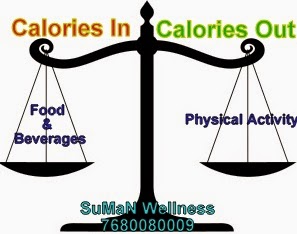
  • So it is very important to maintain the balance.

Where do you store Fat?

  • When you gain weight quickly, you store the fat in your face, neck, chest and abdomen.
  • You can also store fat inside your body around the intestines and liver, where you cannot see it.


Many people who think that they eat good diet and never exercise have excess fat inside the body regardless of whether they look fat or even normal.

In my next blog, I will discuss about BMI, BMI Ranges, Causes of obesity and few other interesting facts.

Friday, 2 January 2015

Calories & Energy Balance - Part 2

In our earlier blog, we have discussed regarding Calories, How are they measured and about Empty calories.

Calories are the measure of energy in food.
How much energy is there in your food?
  • The calories in 5 pounds of spaghetti can brew a pot of coffee.
  • The calories in one piece of cherry cheese cake can light a bulb for 1.5 hours. 

Choose your Calories wisely:

When we talk about calories in foods, we’re really talking about kilo calories or 1000 calories.

  • All activities burn calories. That’s why, in addition to our regular exercise  programs, it’s a good idea to  work extra movement to burn up the calories. 
  • We can take the stairs instead of elevator or park your car at a distance from the shopping center. All such activities will help us to increase the calorie burn.

People burn calories differently:

The amount of calories you burn depends up on:
  • Body Size
  • Composition
  • Age
  • Gender


In a family, everyone burns calories differently.


Manage your calories by:

  • Choosing your calories wisely.
  • Balancing your energy intake with your energy output.The calories that we take should be balanced to the calories that we consume every day.


Monday, 22 December 2014

Calories & Energy Balance - Part 1

What is a Calorie:

  • Calorie is the unit of energy found in food. 
  • This energy is obtained when your body breaks down food and uses it to perform your daily activities.
  • Our specific individual calorie needs depends on several factors such as our activity level and metabolism.

Foods & Calories:

1 Gram of Carbohydrates or proteins produce 4 Calories. Where as 1 gram of Fat / Alcohol gives us lots of calories.

How are food calories measured?

  • Typically food calories are measured in laboratory using a device called Bomb Calorimeter.
  • When you place food in this box, the food is burned up and the heat that is produced determines the amount of calories contained in that food.

Empty Calories:


  • Empty calories have the same energy content like any other calories but lacks nutrients such as fiber, Vitamins and Minerals.
  • Table sugar and alcohol are the top Empty Calorie foods.
  • They are high in calories and have very low nutritional values.
In my next blog, I will discuss few interesting things about calories and tips about managing your calories effectively.

Thursday, 20 November 2014

Why are Vitamins and Minerals Important?

Your body must have the right amount of vitamins and minerals for:
  • Normal growth
  • Metabolism (Creating energy in the cells)
  • General Health

The key is balanced Nutrition- the right amounts of each vitamin and mineral in the right balance.

The Average Person:

The average person can get their recommended amounts for vitamins and minerals simply by eating a reasonable diet containing whole grains, vegetables and fruits.
But..
The Average Person is:
  • An adult younger than 60
  • In good health
  • With perfect digestion
  • Slim
  • Totally Stress- Free
  • Free of any sort of medical problem
  • Not taking any medicines

How much do we need:

  • The amount that government bodies recommend you consume in your diet is set at a level where most individuals will get all the nutrients they need.
  • This level is not the minimum to prevent disease but somewhat higher, and it can be used in school feeding programs and food labeling.
  • Not too much and not too little, but a proper balance of vitamins and minerals is required. 

Preserve the Vitamins and Minerals while cooking:

  • To get the recommended amounts of vitamins and minerals, eat a variety of grains , vegetables, fruits and beans.
  • But in today’s busy schedule, if we are not eating the required amount of fruits and vegetables, take supplements to ensure adequate nutrient intake.


Monday, 10 November 2014

Minerals - Blog 2

In my earlier blog, I have mentioned about Trace and Major minerals. In this blog I will discuss about few Minerals.

Calcium:


  • Calcium is a Major Mineral.
  • It is one of the most abundant mineral in our body. 
  • It is the major requirement for healthy bones and teeth.
  • We can get Calcium from Milk, Dairy Products, Green, leafy vegetables, Supplements etc.

Iron:

  • Iron is a Trace Mineral.
  • Iron is needed to carry oxygen in our blood. 
  • Iron can be found in animal foods like chicken, beef  and pork and plant foods like Whole grains, peas, spinach , beans etc
If you don’t get enough Iron:
It can lead to low blood counts, especially in young Women. 


Potassium:

  • Potassium is a Major Mineral.
  • Most people don’t get as much potassium as they should, in part, because they don’t eat enough fruits and vegetables.
  • It helps the central nervous system send its impulses throughout the body.
  • Helps to efficiently extract energy from food
  • Helps muscles to contract properly.

Sodium:

  • Sodium is a Major Mineral.
  • Salt is sodium chloride.
  • Sodium is an important mineral, but most of us eat excess sodium, which isn’t healthy.

Magnesium

  • Magnesium is a Major Mineral.
  • Every single cell in our body needs magnesium to produce energy. 
  • Magnesium plays an important role in muscle relaxation, bone and teeth strengthening etc.
  • Magnesium helps in proper functioning of muscles.

Selenium:

  • Selenium is a Trace Mineral.
  • It is important to support anti oxidant function in our body. 
  • The amount of selenium in fruits and vegetables depends upon the selenium in the soil in which they were grown.

Phosphorous:

  • Phosphorous is a Major Mineral.
  • About 85% of the phosphorous can be found in bones and teeth. 
  • But it is also available in cells and tissues through out the body. 
  • Phosphorous is found in protein rich foods.

Chromium:

  • Chromium is a Trace Mineral.
  • Chromium burns fat for energy.
  • It helps in controlling the use of glucose.

Zinc:

  • Strengthens your immune system and helps in healthy growth.
  • Zinc is essential for healthy smell and taste.


Tuesday, 21 October 2014

Minerals - Blog 1

What are Minerals?


  • To meet the definition of "mineral" used by most geologists a substance must meet five requirements: 
      1. naturally occurring
      2. inorganic
      3. solid
      4. definite chemical composition
      5. ordered internal structure
  • Minerals are inorganic substances found in the foods and also in the earth. 
  • Few minerals that we need to consume are Calcium, Iron, Phosphorous etc.
  • Getting minerals in right amounts is essential for good health.

There are 2 categories of Minerals
  1. Trace Minerals
  2. Major Minerals

Trace Minerals
  • Some minerals are required in  small amounts by body called TRACE Minerals. 
  • If you need less than 100mg a day, that mineral is called a trace mineral.

Major Minerals
  • Some minerals are required in large quantities by the body, called MAJOR Minerals.
  • A major mineral is an inorganic substance that you  need everyday in amounts higher than 100mg. 

  • A diet rich in green vegetables and fruits, and whole grains grown in fertile soil may afford some assurance of minerals, but much of our soil today is depleted and lacking in essential nutrients.
  • Adding mineral supplements to the diet, will provide some insurance.
  • Having the proper balance of minerals in the body can make the difference between disease or sickness and optimum health.
In my next blog, I will discuss in detail about each of these minerals. You can get more information regarding mineral rich foods in my coming blog.
                                                                 
                                                                                                       ....... To Be Continued

Thursday, 9 October 2014

Vitamins - Blog2

In our earlier blog, we have discussed about Fat and Water soluble Vitamins. In this blog, we would like to discuss in detail about all the Vitamins.

Vitamin A:

  • Vitamin A helps in  bone growth, cell functioning, our eyes adjusting to the light etc. 
  • Vitamin A is available in two forms. In the body, beta-carotene is converted into Vitamin A, whether it comes from foods or supplements.

Vitamin B

  • Help your cells grow and reproduce properly.
  • Send messages back and forth from your brain along your nerves.
  • Helps to produce energy by breaking down the food into energy.
  • You can see the Vitamin B family in the below image.


Vitamin E:

  • This Vitamin protects your cell membranes against damage from free radicals.

Vitamin D:


  • Do you know to get Vitamin E, you need not even eat. 
  • Just go outside and get it from Sun. 
  • This Vitamin is made when the sun shines on our skin, and the ultraviolet light makes a type of cholesterol that turns into Vitamin D.

Vitamin K:

Vitamin K is essential to support normal blood clotting.


The Powerful Vitamin C:

  • Vitamin C helps more than 300 different functions of your body, including your immune system.


Thursday, 25 September 2014

VITAMINS - Blog 1

  • Vitamins are organic nutrients essential for life. 
  • They are essential for our body to function at its best. 
  • If our diet is lacking in Vitamins, it leads to nutritional deficiencies.
Where does the word Vitamin comes from?


Types of Vitamins:

There are 13 Vitamins divided into 2 groups.
  1. Fat Soluble Vitamins
  2. Water Soluble Vitamins

1. Fat Soluble Vitamins:

There are four FAT Voluble Vitamins.
  1. Vitamin A
  2. Vitamin D
  3. Vitamin E
  4. Vitamin K
  • These Vitamins stay in our body longer than water soluble vitamins. 
  • They must be taken regularly and only in the recommended amounts.
  • Fat soluble vitamins, which are also essential for your health and stored in your liver, do not need to be replaced every day

2. Water Soluble Vitamins:
  1. Vitamin B
  2. Vitamin C

  • It is important to take some of these Vitamins everyday to keep our body in proper balance.
  • We lose some of these vitamins everyday in the form of urine.These vitamins are easily destroyed or washed out during food storage and preparation.
  • The B-complex group is found in a variety of foods: cereal grains, meat, poultry, eggs, fish, milk, legumes and fresh vegetables.
  • Citrus fruits are good sources of vitamin C.

Using megadoses of multivitamins or supplements is not recommended.

In my next blog, i will discuss in detail about each of theses Vitamins. Please check the same to know more about the importance of each of the Vitamins and the Vitamin rich foods that you need to eat.

Friday, 12 September 2014

Amino Acids: Building Blocks Of Protein

In our earlier blog, we have discussed that Protein heals the body, produces necessary enzymes and hormones, provides stamina and energy and helps keep the body healthy. Now we are taking a closer look at Protein to discuss Amino Acids.
  • Amino acids make up 75% of our body and serve many essential body functions. In fact, almost every bodily function depends on Amino acids.
  • One of the most essential duties of Amino acids is to create Protein. Amino acids are linked together to form different types of Proteins that our body needs.
  • Amino acids make up Proteins by linking together as long chains. Just like letter blocks can combine to form different words, Amino acids link together in different formations to make different Proteins.
  • If you don’t get the Amino acids that you need from the diet, your body will break down the cells to get them. This results in  loss of Muscles and organ proteins and tissues. That is why it is important to nourish our body with essential Amino acids.

How many Amino acids are there?

 Total Amino Acids = 21

1. Essential Amino acids(Not made by body. Need to consume in Diet) = 9
2. Non- Essential Amino acids(Made by the Body)  =12


1. Essential Amino Acids:


Benefits of Essential Amino acids:
Essential Amino acids provides many benefits. Below given are few of them.
  • Helps in the growth of bones.
  • Helps in providing energy
  • Can influence mood.
  • Help control hunger
  • Provide heart health
  • Helps to sleep better.

Did You Know?

  • Soy protein is the only complete protein in the plant world. Soy contains all the essential Amino acids - the ones that the body cannot make on its own.
  • Vegetarians need to be careful in combining grains and vegetables to get complete protein.

  • Animal based proteins are called complete proteins because they contain balanced levels of Amino acids.

Non-Essential Amino acids:


Benefits of Non- Essential Amino acids:
  • Keep brain and heart health.
  • Keeps Liver, skin and muscles healthy
  • Help build muscles.


Saturday, 6 September 2014

Macro Nutrients : FATS - Blog 2

In my earlier blog, I have discussed about different types of Good and Bad FATS.

In this blog, I would like to discuss about balancing Healthy FATS with Unhealthy Fats.

Balancing Your FATS:

In reality, we take too much Omega 6 FATS and too Little Omega 3 FATS.
We have to balance the FAT in our diet.


Did You Know?


  • Farm-Fed fish have more Omega-6 fat than Omega-3 because they are fed grains rich in Omega-6.Ocean caught fish are rich in Omega-3. They have less Omega-6 and calories than farm-fed fish.
  • Foods high in Trans fats which are unhealthy:
      • French Fries
      • Onion Rings
      • Hamburgers
      • Chicken Nuggets
      • Apple Pie etc

Reduce Animal Fats and Omega-6 Fats:

  • Use lower-fat dairy, such as skim or 1%milk.
  • Trim visible fat and skin from all meat products.
  • Choose the white meat of chicken.
  • Use only egg whites for scrambled eggs and other breakfast recipes

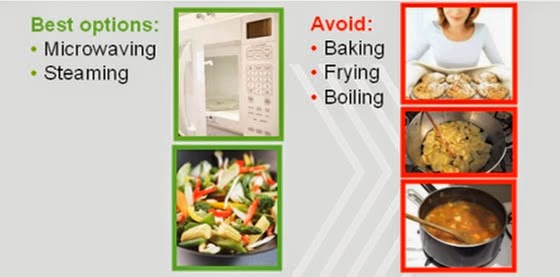
Reduce Fat When You Cook:


Reduce Fat When You Eat Out:

Read menu carefully to make the best low-fat choices:
  • Look for meat, fish and poultry that are baked, broiled, grilled or roasted, rather than fried.
  • Order your vegetables plain without without added sauces or fats.
  • Order your salad with the dressing on the side.
  • Skip the butter when eating bread.
  • Ask for some fresh fruit, such as berries, for dessert.

Fruits and Vegetables are naturally low in Fat

  • Fruits and vegetables contain only very small traces of healthy fats.
  • If you fill up on these foods, you will be less likely to eat more of the higher-fat foods.

How to get more Healthy Fat:

  • Try to eat fish at least twice a week.
  • Avocado is good in salads and on sandwiches.
  • You can toss a handful of nuts into the salad to get a little extra healthy fat.


Thursday, 21 August 2014

Macro Nutrients : FATS - Blog1

FATS are very important for storing calories for human body and for supporting immune function and skin health. In general, we assume that FATS are bad for our health. But FATS are major nutrients like Proteins and Carbohydrates.


  • Fats are essential sources of energy that keeps body healthy. 
  • Certain fats help with brain development, helps in absorbing Vitamins and keep skin and hair healthy.
  • The trouble with Fats is that they contains lots of calories. 1 table spoon of Fat contains about 120 Calories.
  • Some Fats are considered to be healthier than others based upon the composition. So its important to distinguish between Healthy and Non healthy Fats.


Why does body store fat?

  • Fat is way body stores energy so that you can survive for long periods without eating. 
  • If you had enough water to drink and enough vitamins and minerals, you could survive up to six months living off the stored fat in your body. 
  • When we eat more calories than you need, they get converted into fat cells and get stored in our body.
  • Since starvation is not our problem, we are most likely struggling to keep from increasing weight. That is why we need to limit the fat that we take in our food. 
  • The fat we eat is the fat we wear.

Different types of Fats:

Saturated Fats:


  • Most saturated fats are solid at room temperature.
  • They are typically referred as “solid fats”.
  • They include beef fat, pork fat, butter etc.
  • Saturated fats are considered to be less healthy when compared to Monounsaturated Fats.
Trans Fats:

  • Trans fats are made from polyunsaturated fats by a chemical method that makes them act like a saturated fat.
  • Theses fats are considered to be less healthy when compared to Monounsaturated Fats.


Monounsaturated Fats:

When substituted for saturated fats, they lead to lower cholesterol levels and are often called “healthy fats”.

Polyunsaturated Fats:

  • Omega 3 and Omega 6 are both polyunsaturated fatty acids, but they have different effect on body.
  • We need to take more of Omega 3.
  • Omega 3 plays a vital role in maintaining good health, offering a variety of benefits. It also balances negative effects of excess Omega-6.

In My next blog, I will update more about how we can balance our diet with healthy Fats.