Thursday, 12 March 2015

What is your shape?


·         Do you know how much fat you're carrying, compared to how much muscle?
·         Do you know where you tend to gain weight–upper body, lower body or around the middle?

Until you know the answers to these questions, you are not ready to make your personal plan for losing weight and keeping it off. Understanding your body is the first step to reaching your best personal shape.

Body shape counts

Weight loss has been overemphasized and body shape underemphasized. Body shape counts. Shapes are personal and go beyond the usual apple and pear.
·         Women can have three typical body shapes–upper body fat, lower body fat and both upper and lower body fat.
·          Men usually only get upper body fat.
·         The upper body stores fat in times of stress and some people can lose and gain weight rapidly in the upper body.
·          The lower body fat in women responds to female hormones such as estrogen and progesterone and stores fat for breastfeeding a new born baby.
·          Women who have both upper and lower body fat will lose their upper body fat first.
·         Women with more upper body fat tend to have more muscle than women with lower body fat and will need more protein in their diet to help control their hunger.
·         Losing weight is harder if you have lower body fat rather than upper body fat, but the medical benefits of losing your upper body fat are greater.
·         Losing weight around your neck, face, chest and waist usually goes along with losing fat on the inside as well. So as you look better, you are also improving your health tremendously.

Finally, there are two more body shapes to consider: 

  • The shape you can change and the shape you can't change. 
  • It is important to know the difference and work on the shape you can change, while adjusting your wardrobe and attitudes to the shape you cannot change.
  •  Due to low metabolism, many women with lower body fat can't lose weight just by cutting calories. 
  • These lower body-fat cells are resistant to both exercise and diet. 
  • Only a personalized program can help make sure you get enough protein to control cravings and build or maintain lean muscle.


Tuesday, 3 February 2015

Obesity-2

In our earlier blog, we discussed fine details about Obesity. In Continuation.....

What is BMI

  • Body Mass Index(BMI) estimates our body fat and is used the categorize people as Underweight, Healthy Weight, Overweight or Obese.
  • BMI is indicated on a chart based on the height and weight. 
  • However  BMI will not measure body fat directly, so it can miscalculate people as Obese. 
  • For example a sports man may have excess weight due to increased muscle but not of excess fat. According to BMI, he will be thought to Obese, but in reality he may be lean.

BMI Ranges For Adults:

Few Interesting Facts:


Main Causes Of Obesity

  • Over Eating
  • Underactivity

Other Causes Of Obesity:

  • Genetices ( Cause of only 5% of Obesity)
  • Pregnancy( Weight remaining after childbirth)

Obesity rates are raising world wide. Dieting and physical exercise are the main stages of treating Obesity. 

Moreover it is important to improve diet quality by reducing the consumption of high calorie foods.

Monday, 12 January 2015

Obesity - 1

What is Obesity?

        When more calories are consumed than burned, then a person will gain fat and weight .When a person reaches a certain body weight , he/ she is considered as Obese or Overweight.

        The terms Overweight /Obesity are used interchangeably; However as per Institute of Medicine, the technical meanings are not identical.

       Overweight refers to excess of body weight of all tissues, which include bones, muscles and Fat.

       Obesity refers specifically to the excess of body fat.

The cause of Obesity:


  • When energy balance is not maintained, it affects body weight.
  • When low calories are consumed than spent, it leads to low body weight.
  • When more calories are consumed than burnt, it leads to high body weight.
  • So it is very important to maintain the balance.

Where do you store Fat?

  • When you gain weight quickly, you store the fat in your face, neck, chest and abdomen.
  • You can also store fat inside your body around the intestines and liver, where you cannot see it.


Many people who think that they eat good diet and never exercise have excess fat inside the body regardless of whether they look fat or even normal.

In my next blog, I will discuss about BMI, BMI Ranges, Causes of obesity and few other interesting facts.

Friday, 2 January 2015

Calories & Energy Balance - Part 2

In our earlier blog, we have discussed regarding Calories, How are they measured and about Empty calories.

Calories are the measure of energy in food.
How much energy is there in your food?
  • The calories in 5 pounds of spaghetti can brew a pot of coffee.
  • The calories in one piece of cherry cheese cake can light a bulb for 1.5 hours. 

Choose your Calories wisely:

When we talk about calories in foods, we’re really talking about kilo calories or 1000 calories.

  • All activities burn calories. That’s why, in addition to our regular exercise  programs, it’s a good idea to  work extra movement to burn up the calories. 
  • We can take the stairs instead of elevator or park your car at a distance from the shopping center. All such activities will help us to increase the calorie burn.

People burn calories differently:

The amount of calories you burn depends up on:
  • Body Size
  • Composition
  • Age
  • Gender


In a family, everyone burns calories differently.


Manage your calories by:

  • Choosing your calories wisely.
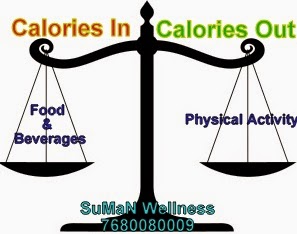
  • Balancing your energy intake with your energy output.The calories that we take should be balanced to the calories that we consume every day.


Monday, 22 December 2014

Calories & Energy Balance - Part 1

What is a Calorie:

  • Calorie is the unit of energy found in food. 
  • This energy is obtained when your body breaks down food and uses it to perform your daily activities.
  • Our specific individual calorie needs depends on several factors such as our activity level and metabolism.

Foods & Calories:

1 Gram of Carbohydrates or proteins produce 4 Calories. Where as 1 gram of Fat / Alcohol gives us lots of calories.

How are food calories measured?

  • Typically food calories are measured in laboratory using a device called Bomb Calorimeter.
  • When you place food in this box, the food is burned up and the heat that is produced determines the amount of calories contained in that food.

Empty Calories:


  • Empty calories have the same energy content like any other calories but lacks nutrients such as fiber, Vitamins and Minerals.
  • Table sugar and alcohol are the top Empty Calorie foods.
  • They are high in calories and have very low nutritional values.
In my next blog, I will discuss few interesting things about calories and tips about managing your calories effectively.

Thursday, 20 November 2014

Why are Vitamins and Minerals Important?

Your body must have the right amount of vitamins and minerals for:
  • Normal growth
  • Metabolism (Creating energy in the cells)
  • General Health

The key is balanced Nutrition- the right amounts of each vitamin and mineral in the right balance.

The Average Person:

The average person can get their recommended amounts for vitamins and minerals simply by eating a reasonable diet containing whole grains, vegetables and fruits.
But..
The Average Person is:
  • An adult younger than 60
  • In good health
  • With perfect digestion
  • Slim
  • Totally Stress- Free
  • Free of any sort of medical problem
  • Not taking any medicines

How much do we need:

  • The amount that government bodies recommend you consume in your diet is set at a level where most individuals will get all the nutrients they need.
  • This level is not the minimum to prevent disease but somewhat higher, and it can be used in school feeding programs and food labeling.
  • Not too much and not too little, but a proper balance of vitamins and minerals is required. 

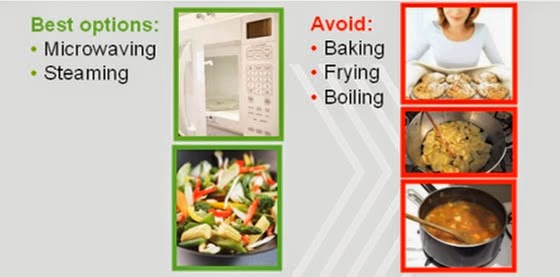
Preserve the Vitamins and Minerals while cooking:

  • To get the recommended amounts of vitamins and minerals, eat a variety of grains , vegetables, fruits and beans.
  • But in today’s busy schedule, if we are not eating the required amount of fruits and vegetables, take supplements to ensure adequate nutrient intake.


Monday, 10 November 2014

Minerals - Blog 2

In my earlier blog, I have mentioned about Trace and Major minerals. In this blog I will discuss about few Minerals.

Calcium:


  • Calcium is a Major Mineral.
  • It is one of the most abundant mineral in our body. 
  • It is the major requirement for healthy bones and teeth.
  • We can get Calcium from Milk, Dairy Products, Green, leafy vegetables, Supplements etc.

Iron:

  • Iron is a Trace Mineral.
  • Iron is needed to carry oxygen in our blood. 
  • Iron can be found in animal foods like chicken, beef  and pork and plant foods like Whole grains, peas, spinach , beans etc
If you don’t get enough Iron:
It can lead to low blood counts, especially in young Women. 


Potassium:

  • Potassium is a Major Mineral.
  • Most people don’t get as much potassium as they should, in part, because they don’t eat enough fruits and vegetables.
  • It helps the central nervous system send its impulses throughout the body.
  • Helps to efficiently extract energy from food
  • Helps muscles to contract properly.

Sodium:

  • Sodium is a Major Mineral.
  • Salt is sodium chloride.
  • Sodium is an important mineral, but most of us eat excess sodium, which isn’t healthy.

Magnesium

  • Magnesium is a Major Mineral.
  • Every single cell in our body needs magnesium to produce energy. 
  • Magnesium plays an important role in muscle relaxation, bone and teeth strengthening etc.
  • Magnesium helps in proper functioning of muscles.

Selenium:

  • Selenium is a Trace Mineral.
  • It is important to support anti oxidant function in our body. 
  • The amount of selenium in fruits and vegetables depends upon the selenium in the soil in which they were grown.

Phosphorous:

  • Phosphorous is a Major Mineral.
  • About 85% of the phosphorous can be found in bones and teeth. 
  • But it is also available in cells and tissues through out the body. 
  • Phosphorous is found in protein rich foods.

Chromium:

  • Chromium is a Trace Mineral.
  • Chromium burns fat for energy.
  • It helps in controlling the use of glucose.

Zinc:

  • Strengthens your immune system and helps in healthy growth.
  • Zinc is essential for healthy smell and taste.